.svg)
.svg)
.svg)


Dental Implants vs. Dentures: How to Choose the Right Tooth Replacement
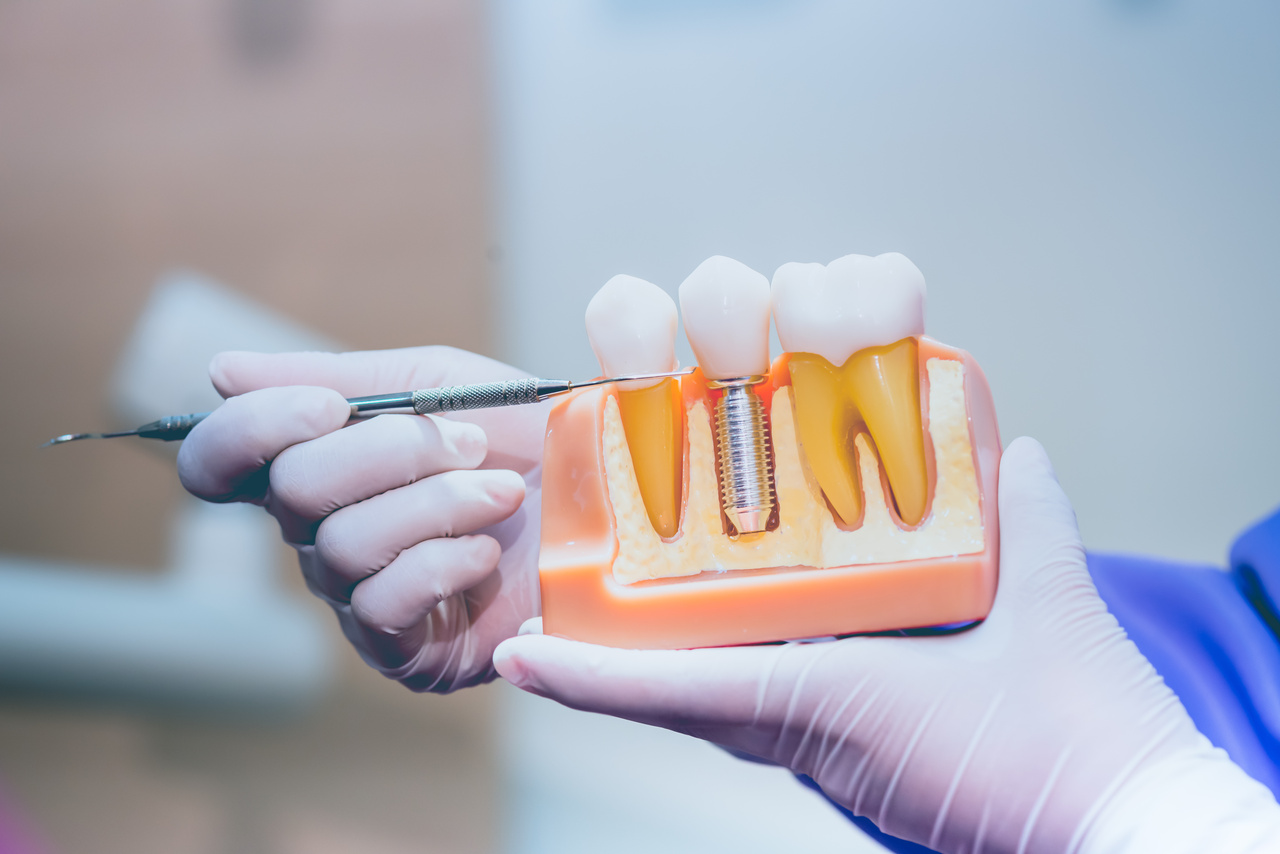
Dental implants are titanium posts surgically placed in the jawbone to permanently replace missing teeth, while dentures are removable appliances that rest on the gums. The core difference is that implants are fixed, function like natural teeth, and preserve jawbone, whereas traditional dentures cost less up front but can shift when eating or speaking and don't prevent the bone loss that follows tooth loss. There's also a middle option—implant-supported dentures—that snaps a denture onto a few implants for far greater stability. The best choice depends on your budget, bone health, and how you want your replacement teeth to feel and last.
Why This Guide Exists
When you're missing several teeth or facing full-arch tooth loss, the choice between implants and dentures can feel overwhelming—and many patients don't realize there's a spectrum of options between the two.
At Curtin Oral Surgery & Associates, board-certified oral surgeon Dr. Jared Curtin helps patients across Southern New Hampshire choose confidently. This guide compares implants, traditional dentures, and implant-supported options across the factors that matter most: fit, cost, longevity, and long-term health.
Dental Implants: The Basics
A dental implant is a titanium post placed in the jaw that fuses with the bone and supports a crown, bridge, or denture. Options range from a single-tooth implant to full-arch solutions like All-on-4.
- Function like natural teeth — fixed in place, with a strong, natural bite.
- Preserve jawbone by stimulating it the way natural tooth roots do.
- Longest-lasting option — implants can last decades with proper care.
- Require a minor surgical procedure and adequate bone (grafting can build it up when needed).
Traditional Dentures: The Basics
Traditional dentures replace a full arch of missing teeth with a removable appliance held by suction or adhesive.
- Lower up-front cost than implant-based options.
- Non-surgical and often delivered relatively quickly.
- Removable for cleaning.
- Can shift or loosen over time as the jawbone changes, and don't slow bone loss.
Implant-Supported Dentures: The Middle Ground
Sometimes searched as "snap-in dentures," implant-supported dentures attach a denture to a few strategically placed implants—combining the affordability of a denture with much of the stability of implants.
- Stays firmly in place — no adhesive, minimal slipping.
- Stronger bite for a wider range of foods.
- Helps preserve jawbone thanks to the supporting implants.
- More affordable than full individual implants while far more secure than traditional dentures.
How to Decide
Dental implants may suit you if:
- You want the most natural feel and function and a long-term solution.
- Preserving jawbone and facial structure is a priority.
- You're in good general health and have (or can build) adequate bone.
Traditional dentures may suit you if:
- Up-front cost is the deciding factor.
- You prefer a non-surgical solution.
Implant-supported dentures may suit you if:
- You want dentures that won't slip but aren't ready for full individual implants.
- You've worn traditional dentures and want a more secure, comfortable fit.
A consultation and 3D scan reveal your bone health and candidacy—the two biggest factors in the recommendation. Many patients start with one option and transition to another over time.
Frequently Asked Questions
Are dental implants worth the higher cost?
For many patients, yes. Implants last longer, function like natural teeth, and preserve jawbone—benefits that often outweigh the higher up-front investment over the long term.
Can I convert my existing dentures to implant-supported?
In many cases, yes. Implant-supported dentures are a common upgrade for patients tired of slipping or adhesive. A consultation determines whether your bone can support the implants.
Does insurance cover implants or dentures?
Coverage varies widely. Dentures are more often partially covered, while implant coverage differs by plan. We review your benefits and estimated costs before treatment.
What if I don't have enough bone for implants?
Bone grafting or ridge augmentation can often rebuild enough bone to support implants. Dr. Curtin will assess this with 3D imaging at your consultation.
Act fast. Gently rinse the tooth (avoid scrubbing), place it in milk or saline, and contact our office immediately. Quick reimplantation can sometimes save the tooth.
Serving Londonderry, Salem & Southern New Hampshire
Whether you're weighing implants, dentures, or something in between, our team can walk you through every option at our Londonderry office or Salem office. We serve patients throughout Southern NH and the Merrimack Valley.
Ready to Explore Your Options?